

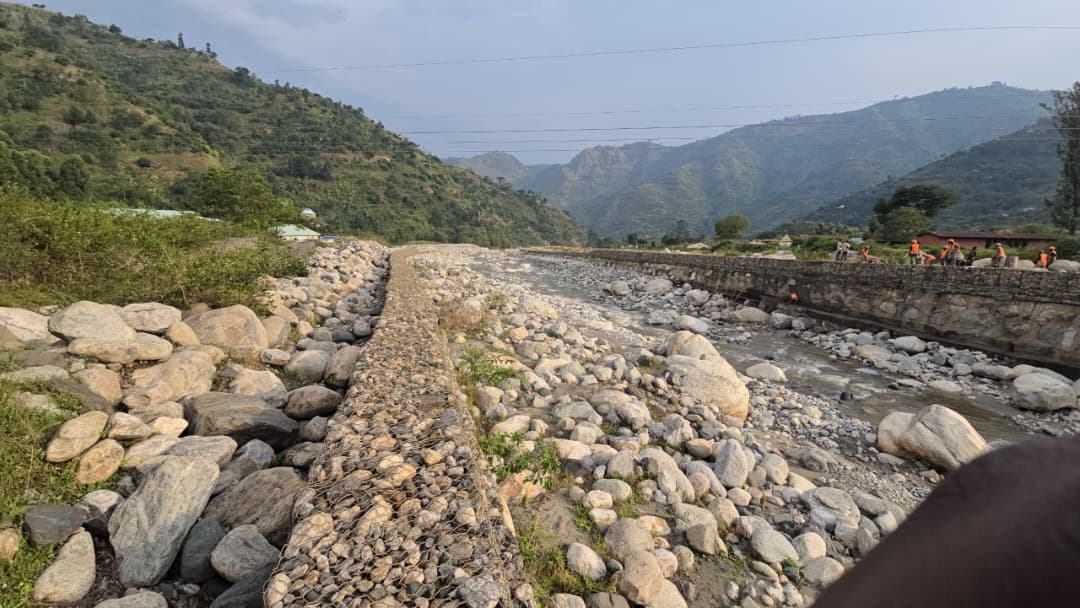
Local leaders and geologists in Kasese District are urging government to conduct a comprehensive geological and hydrological study of River Nyamwamba before proceeding with the second phase of its de-silting project, warning that prior interventions may have been largely temporary.
The Shs20 billion, five-kilometer project was designed to widen and clear sections of the river channel to mitigate recurrent flooding that has devastated parts of Kasese Municipality and surrounding areas over the years.
However, recent inspections indicate that sections cleared during the first phase were quickly refilled with silt and debris following heavy rains, raising concerns over the sustainability of the current approach.
“This is what was left of the Shs20 billion project,” said a local leader during a field visit, pointing at stretches of the river that appear almost as clogged as before the intervention.
Geologists say a detailed study of sediment composition, river flow dynamics, and upstream catchment activity, particularly from the Rwenzori Mountains slopes, is critical to designing a long-term solution.
“We need a comprehensive geological and hydrological study to determine the volume and type of material being deposited into the river system. Without understanding sediment load, flow velocity, and upstream activities, de-silting alone will remain a temporary measure,” said Alex Akwatampora, a geo-scientist.
Akwatampora emphasized that engineering solutions must be guided by scientific data to prevent repeated loss of public funds.
Richard Bomera, chairperson of the Nyamwamba Catchment Management Committee, attributed the shortcomings of the first phase to engineering weaknesses and inappropriate methods applied in critical sections of the river.
“The first phase did not adequately address the technical realities on the ground. In some of the most critical areas, the methods used were not suitable for the magnitude of siltation and water force we experience here,” Bomera said.
He also called for an assessment of the exact quantity and type of materials being washed downstream before committing additional resources.
“Government must first determine how much material is coming from the slopes and what kind of material it is. Otherwise, we risk repeating the same mistakes in the second phase," Bomera added.
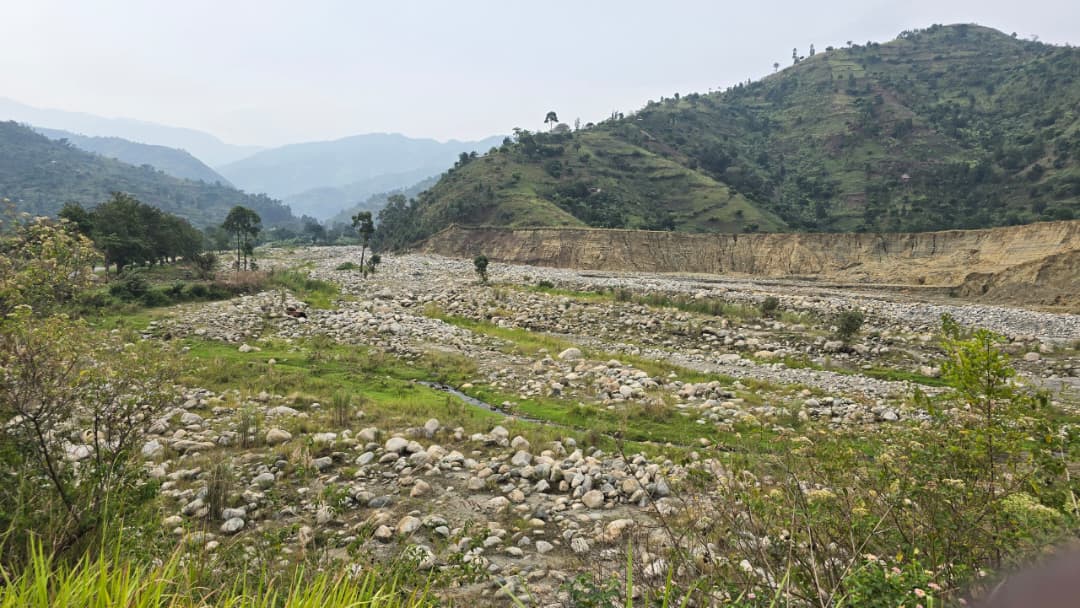
Experts recommend complementing gabions with more permanent retaining structures to stabilize vulnerable riverbanks, particularly during peak rainfall periods.
“Gabions alone are not sufficient. We need firm retaining walls engineered to withstand the river’s pressure,” Akwatampora said.
Environmental specialists warn that de-silting by itself cannot provide a permanent solution. Continued deforestation, land degradation, and human activity along the Rwenzori slopes contribute significantly to downstream siltation.
Unless upstream environmental restoration and strict land-use management are enforced, costly downstream interventions are likely to be undermined.
As government prepares for phase two of the project, stakeholders insist that scientific evidence, rather than urgency, must guide interventions to protect lives and safeguard public resources in Kasese.
